Don’t you just love conspiracy theories?! 911, Roswell, the moon landing, JFK, Princess Diana, Michael Jackson…the list goes on, but did you know that there is a conspiracy theory relating to Elizabeth I which, if true, would make our present day Queen actually Queen Elizabeth I rather than Elizabeth II?
Before I go into the story, I must say a big thank you to Elizabeth Files visitor Jenny for mentioning this long forgotten legend or conspiracy and making me research it some more. I had heard that there were those who believed that Elizabeth I was actually a man but I had never really looked into it before and now I’m glad I did, it’s a fascinating story.
Bram Stoker and Bisley
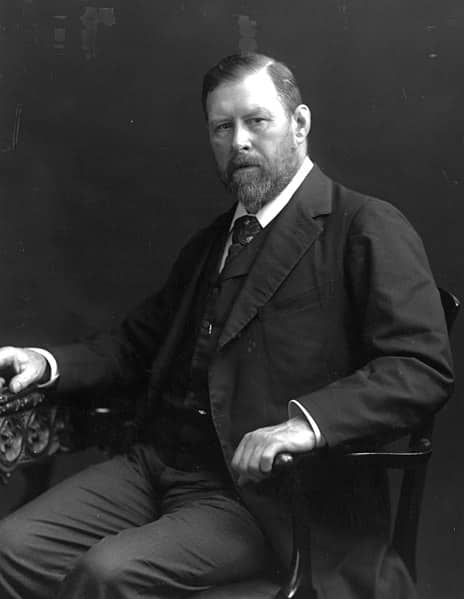
This conspiracy theory has its roots in the writings of Bram Stoker, the famous writer of the Gothic novel Dracula (one of my favourite books!).
Stoker wasn’t just an author, he was also the personal assistant of the actor Henry Irving who had been looking for a house in the Cotswolds in Gloucestershire, England. It was in the village of Bisley that Irving came across the legend of “The Bisley Boy” and he passed the story on to Stoker who was keen to investigate. Both Stoker and Irving were intrigued by the fact that the village’s May Day celebrations involved a boy May Queen dressed in Elizabethan costume. Such traditions are generally based on an historical event or legend and Stoker wanted to find out more about this one – why a male Queen? His digging resulted in a chapter of his book “Famous Imposters” being devoted to “The Bisley Boy”.
You can read the whole story of The Bisley Boy legend in Bram Stoker’s “Famous Imposters”, which can be read online at Internet Archive or downloaded at EbooksRead.com, but I will give a synopsis of the story here and why some people have given credence to this conspiracy theory – Stoker seemed to be convinced of it!
The Bisley Boy Legend
The Story
According to legend, Princess Elizabeth (or rather the Lady Elizabeth) was sent to Overcourt House in Bisley sometime around 1543/1544 to get away from London, where the plague was rife, and enjoy the Cotswold country air. Unfortunately disaster struck and the ten year old princess was taken ill. As the princess lay gravely ill, her governess received word that the King was on his way to visit his daughter and while the house was preparing for the royal visit the princess died from acute fever. What on earth could the governess do? The King was famous for his awful temper and rages and the child’s governess was in a state of despair and complete panic – how could she tell the King of the death of his daughter?
Fearing for her life, the governess searched the local village for a suitable girl to replace Elizabeth so that they could delay this bad news, hide Elizabeth’s body and tell the King at a later date. Her search was utterly futile, no girl of the right age and colouring could be found but suddenly a thought struck her, there was a fair, red headed boy that had actually been a playmate to the little princess. He was a pretty boy, had the right colouring and was close at hand. In desperation, the governess dressed him in the princess’s dress and the deception began.
According to legend, the King, who did not frequently visit his daughter, did not notice the substitution, after all, Elizabeth had always been wary of him and he was in rather a hurry any way. The plan worked and worked so well that the King was never told the truth and Elizabeth’s body was never moved from the stone coffin in the garden at Overcourt where it had initially been hidden. Over three hundred years later, the Reverend Thomas Keble told his family of the discovery of the remains of a girl’s body in a stone coffin at Overcourt while building work was being carried out at the manor house. The remains included rags of fine, Tudor style clothing – cue “Twilight Zone” music!!
The Reasons Stoker Gave it Credence
Well, you can be forgiven for calling this story”tommyrot”, which is what The New York Times said of it in in its 1911 review of Stoker’s book, but here are some of the reasons why Stoker gave it so much credence:-
- Elizabeth’s secretive nature – Her actions during her lifetime seemed to suggest, according to Stoker, that she had a closely guarded secret. Sir Robert Tyrwhitt wrote to Protector Somerset in 1549: “I do verily believe that there hath been some secret promise between my Lady, Mistress Ashley [Elizabeth’s governess] and the Cofferer [Sir Thomas Parry] never to confess to death. “
- Elizabeth’s close relationship with Kat Ashley, Thomas Parry and Blanche Parry – She treated them all with favour and kept them close to her.
- Elizabeth’s refusal to marry
- Rumours that Elizabeth could not bear children – In April 1559, when Elizabeth was only 25, the Count de Feria wrote: “If my spies do not lie, which I believe they do not, for a certain reason which they have recently given me, I understand that she [Elizabeth] will not bear children.”
- A significant change in literary style between the letters Elizabeth wrote Catherine Parr in 1543 and 1544.
- Roger Ascham’s warning in one letter to Kat Ashley not to be too zealous in her teaching of Elizabeth and to go slowly and then a later letter written by Roger Ascham to John Sturmius, Rector of the Protestant University of Strasbourg in 1550 where he writes: The constitution of her mind is exempt from female weakness, and she is endued with a masculine power of application. No apprehension can be quicker than hers, no memory
more retentive. French and Italian she speaks like English; Latin with fluency, propriety and judgment; she also spoke Greek with me, frequently, willingly, and understanding well. Nothing can be more elegant than her handwriting, whether in the Greek or Roman character. In music she is very skillful but does not greatly delight. With respect to personal decoration, she greatly prefers a simple elegance to show and splendour, so despising the outward adorning of plaiting the hair and of wearing of gold, that in the whole manner of her life she rather resembles Hippolyta than Phaedra.” - Catherine Parr’s encouragement of the “horseplay” between her husband, Thomas Seymour, and Elizabeth – Did she know that Elizabeth was a boy and this was her idea of revenge on her husband?
- Elizabeth’s huge stock of wigs – Were they to cover male baldness?
- Elizabeth’s refusal to see other doctors – Stoker cites the occasion when Elizabeth was ill during her house arrest at Woodstock. Apparently, Elizabeth’s usual physicians were not available and Elizabeth refused to see anyone else.
Others who believe this conspiracy theory have also pointed out that Elizabeth left instructions for no post mortem to be carried out on her body and that she liked to wear big dresses and high necklines, which would have hid her male body and use thick drag queen-like makeup.
Who was the Boy?
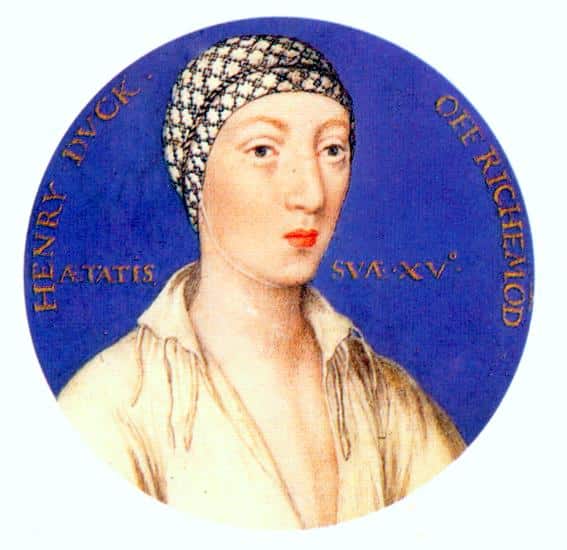
You must read Stoker’s chapter on “The Bisley Boy” to fully understand this, it’s rather long-winded and complicated, but Stoker believed the boy to be the Duke of Richmond’s son by Mary Howard. As the Duke of Richmond was Henry VIII’s illegitimate son, this would explain the boy’s colouring being similar to Elizabeth’s, the resemblance and the intelligence.
Reasons to Discredit this Theory
As much as I love Bram Stoker, I have to say “Poppycock!” very loudly.
I just cannot believe this story has any truth in it whatsoever and I think it’s just people’s attempts to try and understand how a woman can live life without sex and marriage – she must have been a man!
Here are some of my reasons for not believing:-
- Henry VIII was not thick – Surely he would have noticed a change in his daughter even if he hadn’t seen her for a while!
- Elizabeth was not bald – She chose to wear wigs for her image and then to hide her greying hair. When the Earl of Essex famously burst into her bedchamber, he saw a grey haired Elizabeth and according to courtier Rowland Whyte the Queen was “newly up, her hair about her face”.
- Elizabeth had periods – When Philip II’s emissary bribed the Queen’s laundress for details on Elizabeth’s health, the woman reported that the Queen was functioning normally, i.e. menstruating regularly.
- According to Tracy Borman, Elizabeth delighted in wearing low necklines, even into old age. If she was trying to hide a lack of breasts then this was not the way to do it!
- Puberty – Could a teenage boy really have hidden all of the changes involved in puberty?
- Robert Dudley – Whether or not you believe that Elizabeth and Dudley had an intimate relationship, surely Dudley would have noticed that she was a man. I guess you could argue that this was why they never married or why Elizabeth never got pregnant – they could have been gay lovers! – but I’m sorry, I just don’t believe that.
- The secret would have got out – As much as Stoker argues that Bisley was very cut off and that Kat Ashley and the Parrys kept this secret to their graves, I cannot believe that they could have got away with it.
- Doctors – I know Elizabeth was very fussy about her doctors but a whole panel of doctors once examined her during marriage negotiations to see if she could still bear children and they decided that she could. Wouldn’t they have noticed that she was actually a he!
What do you think?
Is this just a story to satisfy those who can’t believe that a woman could rule England so successfully or live without marriage and children or do you think there’s some truth in it?
I do love conspiracy theories!
This tale is complete rubbish and the sad thing is that it goes on even today, because a woman can’t be intelligent, talented, and sexual. Just look how the media portrays Lady Gaga, saying that she has male parts or that she is a man, because she has a strong sexuality. It makes me mad. However, it can go both ways. In high school, in english class, we were about to read Julius Caesar by William Shakespeare and my teacher at the time mentioned a conspiracy theory about Shakespeare and that theory was that he was actually a woman.
With great respect to all the interesting ideas/theories exressed here (although most peopl – myself included – reject them), I suspect the old May Day festival at Bisley had little or nothing to do with Elizabeth I – in drag or otherwise. Some of you may remember the now-famous film “The Wicker Man” from the 1970’s (or have noted its recent re-make). In one shoreline sequence there is a procession led by Lord Summerisle (played by Chr istopher Lee). He is shown wearing a long woman’s wig and a skirt. This follows closely other folk festivals noted by British antiquarians and some are still performed. This Man/Woman character is frequently called “The Betty” – a well-known diminutive of “Elizabeth”.
May Day festivals with their Maypoles, dancing, gathering flowers and herbs in the local woods, were wholly pagan fertilty rites barely tolerated by the Catholic Church. They were, however, extremely popular with ordinary people, the Nobility and most mediaeval kings. Henry VIII celebrated May Day with extraorinary enthusiasm – especially during the first two decades of his reign. It was only during the Puritan ascendancy in the 17th century that there was a ferocious crack-down initiated by Cromwell and Parliament. When the Monarchy was restored in 1660, all the old customs (including Christmas) were joyfully revived.
I strongly suspect that the “Bisley Boy” was a “Betty”. Why “Betty” ? I have no real idea. The name “Elizabeth” appears in The New Testament as the mother of John The Baptist and “kinswoman” of The Virgin Mary. “El” was a name given to God in The Old Testament and is connected in some way with the Canaanite god “Bel” or “Ba’al”. This was the god of the famous “Jezebel”, the wife of the infamous King Ahab and synonymous with female ‘excess’ by the prophets. The names “Isobel/Isabel(la)” are closely related to Jezebel and Elizabeth.
I think Elizabeth’s toughness and strength was due to the fact she was Anne Boleyn’s daughter.
That’s all 🙂
That’s such rubbish! And very odd… I couldn’t ever think of Elizabeth as a man.
Very Interesting.
I agree that this is “Poppycock,” but very interesting and entertaining poppycock.
Taken together with other conspiracy theories of the time it could form the basis of a lengthy “Historical” Novel.
There is, however, no possibility that it is anything other than a story. Apart from your well argued defence, Elizabeth sometimes refered to her childhood. She would have made many mistakes if she were not the real Elizabeth, and would have been found out.
Not in my wildest dreams can I imagine Henry contemplating the thought of going to visit his sick daughter. Or anyone else who was sick. Henry ran from illness. He did not go toward it.
The whole thing is poppycock. Stoker should have stuck to his vampire stories. They were more believable than is Elizabeth having been a boy/man.
Just an aside: If this boy grew into a man, wouldn’t his/her ladies-in-waiting wonder about the beard he had to shave off everyday?
I found this story very interesting—I just saw it on the History channel, and decided to look up related stories and websites on the Internet. The most interesting thing is that my family (Dudley-on my Mom’s side) has passed the same exact story down for hundreds of years.
Same story–Elzabeth died, and a boy was substituted–however in the Dudley family story, the Castle Elizabeth went to was Dudley Castle (abt 90 miles NW of London) and the substituted child was “Arthur Dudley”.
This story does continue, though, as Arthur, was Robert Dudey’s younger brother–which would explain the close relationship of Robert and the “Queen”, and why Robert never blew the whistle on the substitution.
I might add–one of the traits of the Dudley family is red hair
I wrote this legend into a story of mine in the 80s and posted it to myself,never having opened it.Since then I have done more research and have ended up shooting myself in the foot and it all hinges on the fact that Elizabeth`s skin and eyes were the close match of her mother`s ,the late dear Ann Bullen.The eyes and skin of both of them were dark,as if they had Gipsy or Spanish blood.Later Ann signed herself Anna de Boullan;is this a clue to her origins?Anyway – -I can now say that I do not believe the story,fascinating as it may be.
The remains of a dead child? That does sound a bit creepy, but who says it’s Elizabeth?
This is a sexist theory. Who says a woman has to have children or be a powerful monarch?
I do enjoy reading and laughing at the absurdity of these theories, though.
Queen Victoria, Queen Elizabeth II, and Margaret Thatcher: three of England’s great rulers. Have theories ever been proposed that they were in fact genetically male?