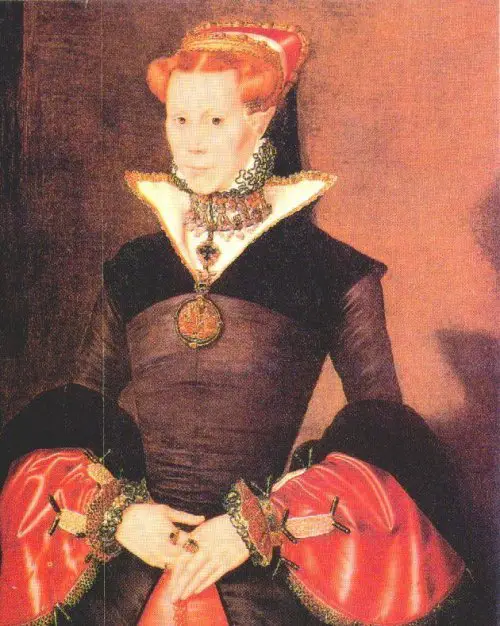
 Apologies for the rather inflammatory headline but I do like to be controversial! I’ve purposely used the misleading nickname that history has given Mary I, daughter of Henry VIII and his first wife, Catherine of Aragon, a title that is still being used today in the new London Dungeon’s Exhibition “Bloody Mary: Killer Queen”.
On this day, 457 years after Mary was informed that the Privy Council had proclaimed her Queen Mary I, I’d like to challenge that nickname.
The Myth of Bloody Mary
This title really does get on my nerves. By nicknaming Mary I “Bloody Mary”, we are completely misunderstanding her, maligning her, perpetuating the myths about her and not giving her the credit she deserves for her reign and for paving the way for Elizabeth I’s Golden Age. When I went to the London Dungeon Bloody Mary exhibition webpage, my blood really began to boil as I read the following on Mary I:-
“History:-
Bloody Mary, the deadliest daughter of Henry VIII is ruthlessly ridding the country of heretics.
In her eyes there is only one faith and all those who believe otherwise must be punished. No one is safe from persecution – men, women and children are all suspect in the eyes of Bloody Mary.
Feel the force of her wrath, the heat of the flames and the intensity of Mary’s obsession!”
It goes on to describe what you’ll experience if you visit the exhibition:-
“What you’ll experience
- Watch as Bloody Mary punishes non believers
- Frightening fire
- Punishment and persecution
- Horrid smells
- Hair raising silence”
Hmm…
(banned London Dungeon Bloody Mary advert)
Now, I do have a sense of humour (really I do!) and I’m all up for a bit of fun and for making history accessible and interesting, but I do feel that this gives a very misleading picture of Mary. I am not justifying what she did, she did order the executions of many heretics and it is clear that she was a very damaged woman, BUT compare her reign to her father’s and it is clear to see who really deserves the nickname “Bloody”.
Was Mary “Bloody”?
In an article on The Daily Telegraph website last week entitled Anti-Catholic junk history II: Mary I killed 284, Henry VIII up to 72,000 – but it’s ‘Bloody Mary’ and ‘Bluff King Hal’, Gerald Warner argued that Protestant propaganda has misrepresented history and that the London Dungeon’s promotion of “junk history” regarding Mary I stems from the blackening of Mary’s name in Protestant Elizabethan England. Very true. He goes on to say that according to John Foxe’s “Book of Martyrs”, a Protestant book, Mary I was responsible for the burning of 284 heretics during her reign whereas, according to Holinshed’s Chronicle, Henry VIII was responsible for 72,000 executions, two of them being his wives! Warner also points out that during Edward VI’s reign 5,500 Cornish Catholic rebels were massacred in the Prayer Book Rebellion. So, let’s do some calculations and divide those numbers of deaths by the number of years of their reigns:-
- Henry VIII – 72,000 divided by 37 years (I’m being kind) = 1945.94
- Edward VI – 5,500 divided by 6 years = 916.66
- Mary I – 284 divided by 5 years = 56.8
Now, I know that this doesn’t give us a full picture because Mary’s and Edward’s figures don’t take into account other executions, but I think it is clear that Mary wasn’t quite as bloody as people make out.
Some of you may argue that Mary was “Bloody” because she killed for religious reasons instead of killing rebels, people who challenged her throne, but then you could argue that Mary saw Protestants as traitors, both to England and to God. To understand Mary I, we have to take into account the context of Tudor England, the religious divisions that existed, and Mary’s beliefs. Just like Thomas More before her, she believed that Protestants were heretics and that it was her job as a true believer to rid England of this evil. Linda Porter, in “Mary Tudor: The First Queen”, points out also that many members of the public were not executed on Mary’s orders but were rounded up and burned by their local authorities, a valid point. I’m not justifying what she did, I hate what she did in God’s name, I’m simply trying to understand the woman.
Historical Illiteracy
In Warner’s article, he accuses London Dungeon of “perpetuating anti-Catholic mythology”,which I think is an unfair accusation as I can’t imagine that London Dungeon were aiming to be anti-Catholic in any way, but I do agree with Warner when he says that “the root problem is historical illiteracy”. By perpetuating myths about historical characters we are doing them an injustice and causing people to learn bad history. We have Elizabeth Woodville the witch or Melusina, Richard III the murdering hunchback, Anne Boleyn the six-fingered whore and witch, Catherine Howard the tart… the list goes on and it is time to challenge these labels and stereotypes and teach people proper history, the truth behind the stereotypes and myths.
The Real Mary I
For those of you who want to know more about the real Mary I, I would heartily recommend Linda Porter’s “Mary Tudor: The First Queen” which I reviewed at http://reviews.theanneboleynfiles.com/mary-tudor-the-first-queen-by-linda-porter/74. Porter’s Mary I is not “Bloody Mary”, but, as the blurb on the back of the book says, “a cultured Renaissance princess, strong-willed and courageous”. Remember, this woman was able to become monarch in a time when females were not meant to rule, she was able to rally troops, challenge Lady Jane Grey and win the crown, and she squashed rebellions successfully during her five year reign. Let’s stop calling her “Bloody Mary” and let’s not make the mistake of seeing her as a pathetic puppet of her husband, Philip of Spain, but instead we should give her credit for her achievements:-
“Her bravery put her on the throne and kept her there, so that when she died she was able to bequeath to Elizabeth a precious legacy that is often overlooked: she had demonstrated that a woman could rule in her own right.” Linda Porter, Mary Tudor: The First Queen.
In a BBC History Magazine article, David Loades lists Mary I’s achievements as:-
- Mary I preserved the Tudor succession
- She strengthened the position of Parliament by using it for her religious settlement
- She established the “gender free” authority of the crown
- She restored and strengthened the administrative structure of the church
- She maintained the navy and reformed the militia
He concludes that “Parliament, the revenues, the navy, even the church benefited from her policies. But the big beneficiary was also the least grateful – Elizabeth. Without her sister’s enlightened legislation and sound administration she would have had a much harder time.”
Mary I’s Struggle for the Throne
You can find out more about Mary I’s struggle for the throne in July 1553 in a wonderful series of posts at littlemisssunnydale’s blog “Mary Tudor: Renaissance Queen”, starting with Monday 3 July 1553: Mary Must Act
Notes and Sources
- Mary Tudor: The First Queen byLinda Porter
- “Anti-Catholic junk history II: Mary I killed 284, Henry VIII up to 72,000 – but it’s ‘Bloody Mary’ and ‘Bluff King Hal'” by Gerald Warner
- The Bloody Queen by David Loades – BBC History Magazine, March 2006
- London Dungeon website
Related posts:
 Mary I Facts
 Mary I’s Legacy
 17th November 1558 – Elizabeth I Becomes Queen
 Mary I versus Elizabeth I
 Elizabeth and Mary Part 2
 Edward VI and Mary I
 Elizabeth I, Mary I and Pope Benedict XVI
19 July 1553 – Mary I Proclaimed Queen
Elizabeth I, Mary I and Pope Benedict XVI
19 July 1553 – Mary I Proclaimed Queen
 Elizabeth and Mary Part 1
 19 July 1553 – Mary Proclaimed Queen in London
Mary I
19 July 1553 – Mary Proclaimed Queen in London
Mary I
 did bloody mary kill in leicster
I feel sorry for Mary Tudor, the girl and woman, but the burnings were so terrible and such crude revenge – like Cranmer, for example – that London and Oxford never forgot. The stench of what she did – burning people “to save their souls” makes as much sense as bombing for peace! – still permeates Protestant souls to this day. I could never be a Catholic knowing that.
Hi Fiz,
I agree with you about Cranmer, there definitely was some revenge involved in his death, and the burnings were horrific, but what about Edward VI and the massacre of the Cornish Catholics or Henry VIII and the Pilgrimage of Grace? They were horrific too. I really don’t want to get into a Protestant V Catholic battle here because I think we all agree that Christianity is about love, not brutality, and God’s name should never be used to justify murder. God must be forever weeping at what we do in his name.
Absolutely superb post Claire and really enjoyed it. Very refreshing to see people like you who are prepared to look past these myths and stereotypes and present another point of view. I agree with you entirely about Mary’s reputation being unjustified to a degree. I was just thinking about her this morning funnily enough, and thinking that in many ways she is to be admired for her courage in defying her father and standing up to him for her principles and in defence for how badly he treated her mother. Warner’s article raises some interesting points, though I don’t agree with all of his points, but Henry is not the ‘merry monarch’ so many people still seem to assume he is, and Mary is nothing like as black as she is painted. When you begin to understand the woman, you can begin to understand why she acted as she did, but not condone it.
Well, I bought the DVD “The twisted tale of Bloody mary” and I most say the whole beginning is badly done (Anne Boleyn is a idiot on the scaffold) but when Mary I comes in the movie it is brilliant.
You see another Mary than the “Bloody one” we all know from the legends.
I see a very damaged woman in that movie , and shure she burned people but think about her live and you understaind a lot of her behavior , she was so sad .
I recomend this movie to everybody (skip the Anne part please hahaha), its well done I think.
Sorry for my English but to speak and listen to English is not so difficult than writing it hahaha.
Great post there Claire, always great to read another point of view on the traditionally held assumption that Mary was a ‘bloody’ monarch. Will have to add the Linda Porter book to my ever-expanding ‘to read’ list…
On another note… that advert is terrifying 🙁
What you say is fair and just, Claire, and provides an excellent balance to the more idiotic and opportunist comments made by people like those in charge of publicity at the Dungeon. But what it is difficult to forgive Mary for is her continual acquiescence before the Church and its increasingly fanatical and vengeful tendencies as it gradually began to regain ground during her reign. She let the interests of the Spanish rule over those of her own people, and allowed the papal legate Cardinal Pole to impose what was more or less an Inquisition in England to rival that of Spain and the incredibly barbaric cruelties inflicted on, say, the people of the Netherlands – who were under Spanish occupation at the time.
As for Bluff King Hal. Yes, of course he was a horrid tyrant. But he also happened to be holding the reigns of power as England went through its greatest and most difficult social transformation from a feudal society to a Renaissance nation, and it was not an easy business negotiating that change – driven as it was by the realities of scientific discovery and geographical expansion. These are what drove the religious Reformation every bit as much as Henry’s love for Anne andthe whole thing inevitably resulted in a lot of unrest and conflict. The huge figure of 72 thousand deaths for which he is said to have been responsible includes those who were dispatched as a result of military campaigns and revolts over the years, along with those convicted of treason.
Mary’s victims, on the other hand, included children, pregnant women and the blind – simple men and women for the most part whose only crime, in some cases, was being unable or unwilling to list the sacraments or else to have been found in possession of a book of prayer in English instead of Latin. They died dreadful deaths by burning – a slow and lingering death. The euphemism at the time of ‘lighting a candle for the pope’ was not merely metaphorical. Often, in rural communities and in the hands of unskilled and incompetent executioners, the victims would burn like candles for hours.
So lets please not become too dewy-eyed over poor Mary. Yes, she was an unfortunate woman, badly treated and psychologically damaged. The task given to her to run the country in 1553 would have overwhelmed the best of men, let alone a poor woman completely unprepared and unsuited for the task. But, at the end of the day, she was cruel more often than she needed to be. She became vindictive and possibly quite mad, especially during her final years of power, and her Council were responsible for some dreadful errors of judgement that caused immense and entirely unnecessary suffering to its own people.
I completely agree with what you say, Robert, and she was needlessly cruel, but I think this tag of “Bloody Mary” and advertising campaigns like that of the London Dungeon are completely misleading and result in bad history and people never getting past that label, stereotype and myth. I can’t abide what she did and the way she let Spain dominate England like that, but she was not the only monarch capable of atrocities, look at Henry and the executions of Margaret Pole and Anne Askew, and the treatment of the people during the Pilgrimage of Grace, and the Cornish rebels in Edward’s time, and yet Mary is the one that is always vilified. I suppose we see the deaths of her reign as more atrocious because she justified them with religion and because burning was so horrible, and perhaps because she was a woman too, not sure!
Anyway, I’m not arguing with you Robert, because I completely agree with you and my Mary is a very damaged woman who let bitterness and hate take a hold of her. I just want people to get past the myth and look at her reign in a more objective way, and perhaps I like causing controversy too!!
Claire, I have long thought, as does my husband, that Henry VIII was England’s most wicked
king. And I don’t want a pro/anti Catholic Argument.
I’m still on a mission to understand Henry, Fiz, I really want to figure out what made him turn into a monster.
Hear, hear! It’s about time that someone adressed “Bloody” Queen Mary I, as well as the other historic labels. You are absolutely right about Henry VIII ultimately being responsible for more deaths yet being looked upon more favoribly. This is not even the only case of this happening in history. If you ask your average person who they believe to be the more evil dictator of the past few hundred years, most will reply Adolf Hitler over Joseph Stalin as Hitler is the one you hear most about due to the Holocaust. But while Hitler was responsible for the deaths of approximately 11 million (Jews and other “undesirables”), Stalin slew between 40 and 60 million of his own countrymen. As in the case of Henry and Mary, we really need to abandon pre-concieved notions and just let the numbers speak for themselves.