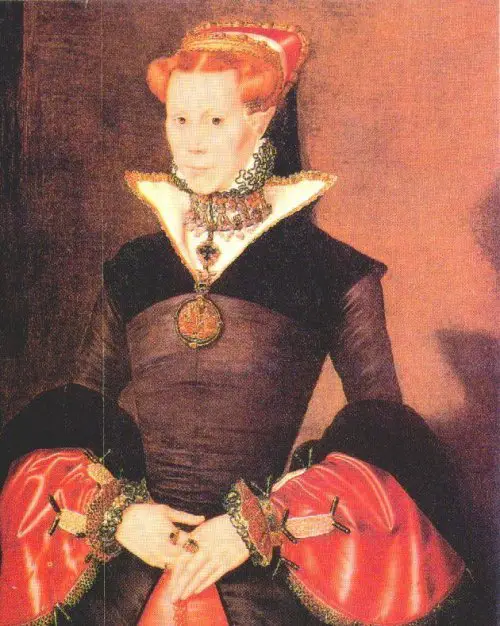
 Apologies for the rather inflammatory headline but I do like to be controversial! I’ve purposely used the misleading nickname that history has given Mary I, daughter of Henry VIII and his first wife, Catherine of Aragon, a title that is still being used today in the new London Dungeon’s Exhibition “Bloody Mary: Killer Queen”.
On this day, 457 years after Mary was informed that the Privy Council had proclaimed her Queen Mary I, I’d like to challenge that nickname.
The Myth of Bloody Mary
This title really does get on my nerves. By nicknaming Mary I “Bloody Mary”, we are completely misunderstanding her, maligning her, perpetuating the myths about her and not giving her the credit she deserves for her reign and for paving the way for Elizabeth I’s Golden Age. When I went to the London Dungeon Bloody Mary exhibition webpage, my blood really began to boil as I read the following on Mary I:-
“History:-
Bloody Mary, the deadliest daughter of Henry VIII is ruthlessly ridding the country of heretics.
In her eyes there is only one faith and all those who believe otherwise must be punished. No one is safe from persecution – men, women and children are all suspect in the eyes of Bloody Mary.
Feel the force of her wrath, the heat of the flames and the intensity of Mary’s obsession!”
It goes on to describe what you’ll experience if you visit the exhibition:-
“What you’ll experience
- Watch as Bloody Mary punishes non believers
- Frightening fire
- Punishment and persecution
- Horrid smells
- Hair raising silence”
Hmm…
(banned London Dungeon Bloody Mary advert)
Now, I do have a sense of humour (really I do!) and I’m all up for a bit of fun and for making history accessible and interesting, but I do feel that this gives a very misleading picture of Mary. I am not justifying what she did, she did order the executions of many heretics and it is clear that she was a very damaged woman, BUT compare her reign to her father’s and it is clear to see who really deserves the nickname “Bloody”.
Was Mary “Bloody”?
In an article on The Daily Telegraph website last week entitled Anti-Catholic junk history II: Mary I killed 284, Henry VIII up to 72,000 – but it’s ‘Bloody Mary’ and ‘Bluff King Hal’, Gerald Warner argued that Protestant propaganda has misrepresented history and that the London Dungeon’s promotion of “junk history” regarding Mary I stems from the blackening of Mary’s name in Protestant Elizabethan England. Very true. He goes on to say that according to John Foxe’s “Book of Martyrs”, a Protestant book, Mary I was responsible for the burning of 284 heretics during her reign whereas, according to Holinshed’s Chronicle, Henry VIII was responsible for 72,000 executions, two of them being his wives! Warner also points out that during Edward VI’s reign 5,500 Cornish Catholic rebels were massacred in the Prayer Book Rebellion. So, let’s do some calculations and divide those numbers of deaths by the number of years of their reigns:-
- Henry VIII – 72,000 divided by 37 years (I’m being kind) = 1945.94
- Edward VI – 5,500 divided by 6 years = 916.66
- Mary I – 284 divided by 5 years = 56.8
Now, I know that this doesn’t give us a full picture because Mary’s and Edward’s figures don’t take into account other executions, but I think it is clear that Mary wasn’t quite as bloody as people make out.
Some of you may argue that Mary was “Bloody” because she killed for religious reasons instead of killing rebels, people who challenged her throne, but then you could argue that Mary saw Protestants as traitors, both to England and to God. To understand Mary I, we have to take into account the context of Tudor England, the religious divisions that existed, and Mary’s beliefs. Just like Thomas More before her, she believed that Protestants were heretics and that it was her job as a true believer to rid England of this evil. Linda Porter, in “Mary Tudor: The First Queen”, points out also that many members of the public were not executed on Mary’s orders but were rounded up and burned by their local authorities, a valid point. I’m not justifying what she did, I hate what she did in God’s name, I’m simply trying to understand the woman.
Historical Illiteracy
In Warner’s article, he accuses London Dungeon of “perpetuating anti-Catholic mythology”,which I think is an unfair accusation as I can’t imagine that London Dungeon were aiming to be anti-Catholic in any way, but I do agree with Warner when he says that “the root problem is historical illiteracy”. By perpetuating myths about historical characters we are doing them an injustice and causing people to learn bad history. We have Elizabeth Woodville the witch or Melusina, Richard III the murdering hunchback, Anne Boleyn the six-fingered whore and witch, Catherine Howard the tart… the list goes on and it is time to challenge these labels and stereotypes and teach people proper history, the truth behind the stereotypes and myths.
The Real Mary I
For those of you who want to know more about the real Mary I, I would heartily recommend Linda Porter’s “Mary Tudor: The First Queen” which I reviewed at http://reviews.theanneboleynfiles.com/mary-tudor-the-first-queen-by-linda-porter/74. Porter’s Mary I is not “Bloody Mary”, but, as the blurb on the back of the book says, “a cultured Renaissance princess, strong-willed and courageous”. Remember, this woman was able to become monarch in a time when females were not meant to rule, she was able to rally troops, challenge Lady Jane Grey and win the crown, and she squashed rebellions successfully during her five year reign. Let’s stop calling her “Bloody Mary” and let’s not make the mistake of seeing her as a pathetic puppet of her husband, Philip of Spain, but instead we should give her credit for her achievements:-
“Her bravery put her on the throne and kept her there, so that when she died she was able to bequeath to Elizabeth a precious legacy that is often overlooked: she had demonstrated that a woman could rule in her own right.” Linda Porter, Mary Tudor: The First Queen.
In a BBC History Magazine article, David Loades lists Mary I’s achievements as:-
- Mary I preserved the Tudor succession
- She strengthened the position of Parliament by using it for her religious settlement
- She established the “gender free” authority of the crown
- She restored and strengthened the administrative structure of the church
- She maintained the navy and reformed the militia
He concludes that “Parliament, the revenues, the navy, even the church benefited from her policies. But the big beneficiary was also the least grateful – Elizabeth. Without her sister’s enlightened legislation and sound administration she would have had a much harder time.”
Mary I’s Struggle for the Throne
You can find out more about Mary I’s struggle for the throne in July 1553 in a wonderful series of posts at littlemisssunnydale’s blog “Mary Tudor: Renaissance Queen”, starting with Monday 3 July 1553: Mary Must Act
Notes and Sources
- Mary Tudor: The First Queen byLinda Porter
- “Anti-Catholic junk history II: Mary I killed 284, Henry VIII up to 72,000 – but it’s ‘Bloody Mary’ and ‘Bluff King Hal'” by Gerald Warner
- The Bloody Queen by David Loades – BBC History Magazine, March 2006
- London Dungeon website
Related posts:
 Mary I Facts
 Mary I’s Legacy
 17th November 1558 – Elizabeth I Becomes Queen
 Mary I versus Elizabeth I
 Elizabeth and Mary Part 2
 Edward VI and Mary I
 Elizabeth I, Mary I and Pope Benedict XVI
19 July 1553 – Mary I Proclaimed Queen
Elizabeth I, Mary I and Pope Benedict XVI
19 July 1553 – Mary I Proclaimed Queen
 Elizabeth and Mary Part 1
 19 July 1553 – Mary Proclaimed Queen in London
Mary I
19 July 1553 – Mary Proclaimed Queen in London
Mary I
 did bloody mary kill in leicster
Personally, I don’t like labels – Alexander was probably not “the great” to the people he conquered, I doubt Ivan “the terrible” was worse than most czars, and Mary was not “bloody” in comparison with the other Tudors. Rob, I don’t think there is a good way to kill someone – all over the world people have done horrible things to one another in the name of religion, political, racial, or economic reasons. I think historians should help us understand the causes and the reasons for a person’s actions, as well as putting their actions into the context of when they lived and how those actions effected others.
Hi Claire, i loved your post on Mary I, you said everything.
Mary doesn’t deserve this title, unless we can add it on the others absolut kings and queens of her time. It’s like all the things she did in good of England was erased by the marian persecutions.
It was not so much “Bloody Mary” as “Bloody Tudors.” They were all mass murderers. Life was very cheap. They were collectively the Stalins or Hitlers of their day.
The Murder of Queen Jane Gray, (who had been legitamately declared Queen under the laws of succession of the day) turned the people of London, sickened by the blood of the early Tudors, against her. The use of burning on religeous opponents was an act of gross barbarism, even by the standards of the day, leading many to dispise her.
Elizabeth 1st was little better in her early years, but she won a war against the Spanish (Thanks to the Weather) and the people forgave her earlier behavior.
As the Chinese curse is reputed to say
“May you live in interesting times.”
These were very interesting times.
i love mary tudor. The reason why she killed all the people is because she was treated very badly as a child. and when someone who is treated bad as a child they are messed up in the head. henry VIII divorce mary’s mother to be with a witch and that was just wrong. just b/c henry couldnt have a son with catherine. that dont mean divorce the wife and marry another. i dont approve of what henry did to his true rightful wife and queen catherine and his daughter mary…. if all that mess would not have happened mary would not have killed so many people trying to bring back the country to the TRUE faith.
I think the Marian burnings were more to do with Mary’s faith than her childhood. Just like Thomas More, she viewed heretics as spawn of the Devil and saw her job as monarch to rid England of such evil. I don’t approve of Henry’s treatment of many of his wives but Anne Boleyn was no witch and I believe that the Reformation in England would have happened whether Henry VIII had annulled his marriage to Catherine or not, just look at France and the problems they had with religion.
I visited the London Dungeon last year and thought the Mary section of the tour somewhat biased. I don’t think this was anti-catholic but just the nature of the attraction to consentrate on the horrifc aspects of history. When Mary became Queen she believed that God had allowed her to truimph in order to bring England back to the Catholic faith. But at thirtyeight with a history of ill health and menstrual problems she knew time was against her. I believe this is why she became so militant in the burning of heretics, perhaps if she had become Queen as a younger and healthier woman she would have not have felt the need to persucute to such extremes. There was a documentary on this year that put forward the theory that given the symptoms of Mary’s illness that she may have had a brain tumour that effected her actions. The same documentary pointed out that it was after his jousting accident, in which he likely suffered brain damage, that Henry became increasingly more ruthless.
Bravo. Finally an educated person. I lived in England and was an Oxford MSc,DPhil student and it always amazed me that the English come up with all sorts of myths to justify virtually anything – from Jesus coming to England to Elizabeth ! being such a level-headed and fair tolerant Christian. I have to remind people that Mary came to power after Henry VIII had already committed horrible acts of murder against clergy and that many of Mary’s actions were aimed at bringing justice/punishment towards those who had perpetrated these crimes in the first place. I still have to find an Anglican clergy person of the likes of some of those murdered by Elizabeth I. Please don’t cite Cranmer – he was a worm. But I digress. Elizabeth ! was so controlling that she put to death people who even had rosaries or copies of Robert Bellarmine’s scholarly book arguing the illegitimacy of their arguments. The more I read on the history of England I find that more and more Catholics existed but were afraid of being “out” in Elizabethan days. She too is portrayed improperly. She was after all the daughter of a whore and illegitimate.
I must agree with many arguments you have said Claire but I would like to point out that in her early reign she gave the people freedom of religion she did not wish to force religion on the people. Not until the rebellions of Kent, and other provinces that threatened not only her crown but her religion in which case she had had to act. As well we must not think all protestants burnt were just the kindest most peaceful people, on several accounts groups of protestant men would stand outside churches and when the Catholics exited after mass the protestants would stab groups of them at a time; men, women and children; to death. On Another account a protestant man lit a church on fire while mass was being said and everyone inside perished. I cannot justify the burnings as much as I favor Mary, but no one can really look on such a situation this day and age and judge the burnings unbiased. Another point to bring up is that even Mary found some disgust in some of the burnings. She gave power to her Bishops and local authorities to burn heretics, this is when the people of England even started to despise the burnings. The bishops and authorities burned people with cruelty and without pity or care. Although Mary did believe strongly in the burning of heretics she did not personally condemn them all, most of the people she condemned were the leaders of the Protestants. If Mary would not have succumbed to death I believe England would be Catholic today, as near the end of her reign the burnings finally started to show the intended effect they were supposed to have; repelling of Protestants, and Increasing in the number of Catholics. But instead she died and her ultimate goal was ended, she was then to be remembered ‘Bloody Mary’ an unfortunate namesake for a great Queen.
No matter what her intentions, it was a bloody reign of death and murder. Mary I was responsible for the burning of 284 heretics during her reign whereas, according to Holinshed’s Chronicle, Henry VIII was responsible for 72,000 executions, two of them being his wives! Warner also points out that during Edward VI’s reign 5,500 Cornish Catholic rebels were massacred in the Prayer Book Rebellion.
So then Mo, in your accusation are you willing to say that every king or queen of England were just bloody murderers? That any ruler in all of history were just bloody murderers? For you to look in on Mary’s reign and claim is was just a “bloody reign of death and murder” is both unknowledgable and ill-insightful of the times in which these these Monarchs ruled. I have no way of backing the executions of any ruler, but you must put your mind into their heads in order to understand where they stand.
I’d just like to add that Queen Elizabeth I also killed many Catholics whom she regarded as political foes (not unlike Queen Isabella of Spain who tied to root out the Jews and the Moors). I wonder how many of them she killed? Burning at the stake sounds tortuous but what about drawing and quartering? This is how Queen Elizabeth killed Catholic priests. I’m not trying to downplay burning at the stake but I did read that most victims dies from smoke inhalation rather than physically burning to death. A terrible death nonetheless. But, the point I’m getting at is that English (and American history) is very one-sided when it comes to the struggles between Catholics and Protestants. From what I’ve read, Catholics ended up being the largest victims.
Leah Dickerson