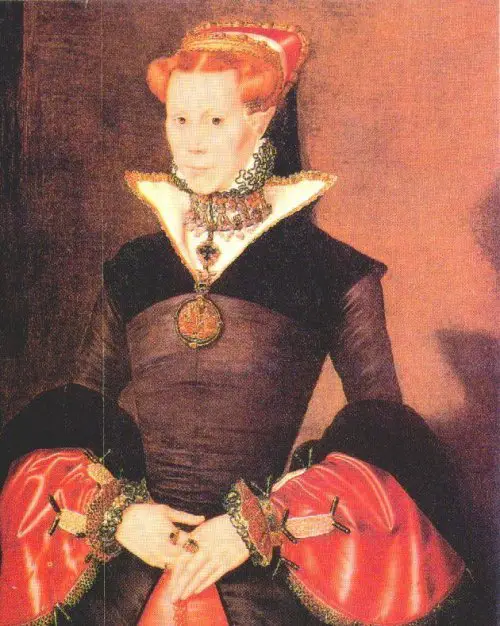
 Apologies for the rather inflammatory headline but I do like to be controversial! I’ve purposely used the misleading nickname that history has given Mary I, daughter of Henry VIII and his first wife, Catherine of Aragon, a title that is still being used today in the new London Dungeon’s Exhibition “Bloody Mary: Killer Queen”.
On this day, 457 years after Mary was informed that the Privy Council had proclaimed her Queen Mary I, I’d like to challenge that nickname.
The Myth of Bloody Mary
This title really does get on my nerves. By nicknaming Mary I “Bloody Mary”, we are completely misunderstanding her, maligning her, perpetuating the myths about her and not giving her the credit she deserves for her reign and for paving the way for Elizabeth I’s Golden Age. When I went to the London Dungeon Bloody Mary exhibition webpage, my blood really began to boil as I read the following on Mary I:-
“History:-
Bloody Mary, the deadliest daughter of Henry VIII is ruthlessly ridding the country of heretics.
In her eyes there is only one faith and all those who believe otherwise must be punished. No one is safe from persecution – men, women and children are all suspect in the eyes of Bloody Mary.
Feel the force of her wrath, the heat of the flames and the intensity of Mary’s obsession!”
It goes on to describe what you’ll experience if you visit the exhibition:-
“What you’ll experience
- Watch as Bloody Mary punishes non believers
- Frightening fire
- Punishment and persecution
- Horrid smells
- Hair raising silence”
Hmm…
(banned London Dungeon Bloody Mary advert)
Now, I do have a sense of humour (really I do!) and I’m all up for a bit of fun and for making history accessible and interesting, but I do feel that this gives a very misleading picture of Mary. I am not justifying what she did, she did order the executions of many heretics and it is clear that she was a very damaged woman, BUT compare her reign to her father’s and it is clear to see who really deserves the nickname “Bloody”.
Was Mary “Bloody”?
In an article on The Daily Telegraph website last week entitled Anti-Catholic junk history II: Mary I killed 284, Henry VIII up to 72,000 – but it’s ‘Bloody Mary’ and ‘Bluff King Hal’, Gerald Warner argued that Protestant propaganda has misrepresented history and that the London Dungeon’s promotion of “junk history” regarding Mary I stems from the blackening of Mary’s name in Protestant Elizabethan England. Very true. He goes on to say that according to John Foxe’s “Book of Martyrs”, a Protestant book, Mary I was responsible for the burning of 284 heretics during her reign whereas, according to Holinshed’s Chronicle, Henry VIII was responsible for 72,000 executions, two of them being his wives! Warner also points out that during Edward VI’s reign 5,500 Cornish Catholic rebels were massacred in the Prayer Book Rebellion. So, let’s do some calculations and divide those numbers of deaths by the number of years of their reigns:-
- Henry VIII – 72,000 divided by 37 years (I’m being kind) = 1945.94
- Edward VI – 5,500 divided by 6 years = 916.66
- Mary I – 284 divided by 5 years = 56.8
Now, I know that this doesn’t give us a full picture because Mary’s and Edward’s figures don’t take into account other executions, but I think it is clear that Mary wasn’t quite as bloody as people make out.
Some of you may argue that Mary was “Bloody” because she killed for religious reasons instead of killing rebels, people who challenged her throne, but then you could argue that Mary saw Protestants as traitors, both to England and to God. To understand Mary I, we have to take into account the context of Tudor England, the religious divisions that existed, and Mary’s beliefs. Just like Thomas More before her, she believed that Protestants were heretics and that it was her job as a true believer to rid England of this evil. Linda Porter, in “Mary Tudor: The First Queen”, points out also that many members of the public were not executed on Mary’s orders but were rounded up and burned by their local authorities, a valid point. I’m not justifying what she did, I hate what she did in God’s name, I’m simply trying to understand the woman.
Historical Illiteracy
In Warner’s article, he accuses London Dungeon of “perpetuating anti-Catholic mythology”,which I think is an unfair accusation as I can’t imagine that London Dungeon were aiming to be anti-Catholic in any way, but I do agree with Warner when he says that “the root problem is historical illiteracy”. By perpetuating myths about historical characters we are doing them an injustice and causing people to learn bad history. We have Elizabeth Woodville the witch or Melusina, Richard III the murdering hunchback, Anne Boleyn the six-fingered whore and witch, Catherine Howard the tart… the list goes on and it is time to challenge these labels and stereotypes and teach people proper history, the truth behind the stereotypes and myths.
The Real Mary I
For those of you who want to know more about the real Mary I, I would heartily recommend Linda Porter’s “Mary Tudor: The First Queen” which I reviewed at http://reviews.theanneboleynfiles.com/mary-tudor-the-first-queen-by-linda-porter/74. Porter’s Mary I is not “Bloody Mary”, but, as the blurb on the back of the book says, “a cultured Renaissance princess, strong-willed and courageous”. Remember, this woman was able to become monarch in a time when females were not meant to rule, she was able to rally troops, challenge Lady Jane Grey and win the crown, and she squashed rebellions successfully during her five year reign. Let’s stop calling her “Bloody Mary” and let’s not make the mistake of seeing her as a pathetic puppet of her husband, Philip of Spain, but instead we should give her credit for her achievements:-
“Her bravery put her on the throne and kept her there, so that when she died she was able to bequeath to Elizabeth a precious legacy that is often overlooked: she had demonstrated that a woman could rule in her own right.” Linda Porter, Mary Tudor: The First Queen.
In a BBC History Magazine article, David Loades lists Mary I’s achievements as:-
- Mary I preserved the Tudor succession
- She strengthened the position of Parliament by using it for her religious settlement
- She established the “gender free” authority of the crown
- She restored and strengthened the administrative structure of the church
- She maintained the navy and reformed the militia
He concludes that “Parliament, the revenues, the navy, even the church benefited from her policies. But the big beneficiary was also the least grateful – Elizabeth. Without her sister’s enlightened legislation and sound administration she would have had a much harder time.”
Mary I’s Struggle for the Throne
You can find out more about Mary I’s struggle for the throne in July 1553 in a wonderful series of posts at littlemisssunnydale’s blog “Mary Tudor: Renaissance Queen”, starting with Monday 3 July 1553: Mary Must Act
Notes and Sources
- Mary Tudor: The First Queen byLinda Porter
- “Anti-Catholic junk history II: Mary I killed 284, Henry VIII up to 72,000 – but it’s ‘Bloody Mary’ and ‘Bluff King Hal'” by Gerald Warner
- The Bloody Queen by David Loades – BBC History Magazine, March 2006
- London Dungeon website
Related posts:
 Mary I Facts
 Mary I’s Legacy
 17th November 1558 – Elizabeth I Becomes Queen
 Mary I versus Elizabeth I
 Elizabeth and Mary Part 2
 Edward VI and Mary I
 Elizabeth I, Mary I and Pope Benedict XVI
19 July 1553 – Mary I Proclaimed Queen
Elizabeth I, Mary I and Pope Benedict XVI
19 July 1553 – Mary I Proclaimed Queen
 Elizabeth and Mary Part 1
 19 July 1553 – Mary Proclaimed Queen in London
Mary I
19 July 1553 – Mary Proclaimed Queen in London
Mary I
 did bloody mary kill in leicster
I’m so glad I wasn’t around that time period at all The Tudor was Murder plain and simple they did what they wanted, and it didn’t matter who was in the way, when you tied someone to a pile of wood and set it on fire doesn’t matter if the smoke killed you first it is still wrong. A Murder is still a Murder no matter how you justified it, all the beheading and torture, killing women and children alike, and by reading everyone post i learn a lot I respect everyone views but I will never side with Murder, those of the past or the future.
Regarding the relative tolerance of Mary and Elizabeth, there may be more to the story than just the different personalities of the two monarchs. Despite the attempt at a thorough Protestant Reformation in Edward VI’s reign, it was probably still the case that the majority of the population in the late 1550s were Catholic in belief, although with widely differing degrees of conviction and commitment. Elizabeth therefore probably had little realistic choice but to tolerate private dissent and settle for outward conformity – any attempt to emulate her sister (but from the Protestant side) would have risked large-scale rebellion. Mary, by contrast, probably resorted to outright persecution because it seemed like a feasible solution to her problems.
It’s worth noting that, quite apart from the 16th century’s different notions of what would be pleasing to God, it was also a truism of the age that differing religions in the same kingdom was an inevitable recipe for bloody civil war, and the experience of France, Scotland, Germany, Ireland, Spain and the Low Countries was interpreted not as evidence of the need for tolerance, but as confirmation that any kingdom must have only one faith. And indeed even England subsequently went on to have a Civil War in the 1640s, at least partly over religious differences that the Elizabethean settlement had driven underground, rather than actually resolving.
I suspect that Mary would have argued that it was better to execute a few hundred heretics in the short term rather than to risk far bloodier religious dissension in the long run. Barring a few cases where personal score-settling was an issue (eg Cranmer), I don’t think Mary derived any pleasure from the burnings; she more probably simply persuaded herself that they were a grim “necessity”.
In non-religious matters at least, Mary and Elizabeth were both regarded by their counsellors as frustratingly hard to persuade to execute people – Mary was very reluctant to sanction the execution of Jane Grey, and Elizabeth similarly hesitated over the Duke of Norfolk in the 1570s and Mary Stuart a little later. Neither Queen was an irresponsible person who took killing people lightly.
Unlike, perhaps, a certain King Henry VIII.
And even King Henry’s misdeeds may need to be put in a certain amount of context. The Pilgrims of Grace, for example, were demanding not only the execution of Henry’s chief ministers, notably Thomas Cromwell, but also the instituting of immediate heresy trials and burnings. Not all of Henry’s victims were themselves altogether tolerant ! It was an age where it was difficult to be an entirely “nice” monarch.
Still no real excuse for Henry’s treatment of his wives, daughters and cousins though.
I wonder if Mary was a man, her reign would be looked upon differently. She killed 284 people. I understand that they were killed in a horrific way but in the grand scheme of things how can you compare 284 deaths with those who killed in the thousands ? What difference does it make what the cause was. Murder is murder no matter how it is justified.
I wonder if Mary was a man, her reign would be looked upon differently. She killed 284 people. I understand that they were killed in a horrific way but in the grand scheme of things how can you compare 284 deaths with those who killed in the thousands ? What difference does it make what the cause was? Murder is murder no matter how it is justified.
All seriousness aside; does anyone here like to drink bloodymary drinks? 🙂
I’m not sure which is more irritating: the “Bloody Mary” sound bite, or the assumption that Mary I was Mary, Queen of Scots!!!
Actually Mary did not kill anyone: the authorities tried and lawfully executed them using her laws.
The article is very good but some of the comments above are still the normal hysterical rubbish that comes out when you mention Queen Mary Tudor. I am not even going to discus the legitimate deaths for heresy in her reign as they have been covered already but turn to your list of her achievments. One is actually missing and it is probably the most important as it was a difficult one for her to pass in Parliament.
Mary negotiated a complex and sympathetic treaty concerning her marriage to KIng Philip of Spain that protected English independence and our national interests. She was sensitive to the fact that some quarters under Wyatt who actually rebelled despite her efforts to protect the English identity in the marriage; were worried about what sort of influence Philip and Spain would have in England. She even threw herself on her knees before her council and begged them to help her in her dilemma and to advise her on how to be a good and just ruler. Her marriage treaty was discused with them and both houses of Parliament, that were free to do so without her displeasure.
The treaty that followed maintained that Mary would rule England and that although Philip would have the title of King, he would not have any of the power; he would be her equal but her consort. It maintained England’s independance and prevented Philip from ruling England should Mary die. It also made sure that we were not meant to be dragged into Spains wars, but it did allow for some mutural military aid in certain cases such as Flanders and both England and Spain had on going claims in this region. The treaty is a long and rather complx document but it is seen as remarkable in it attempts to maintain the total independence of both parties, unique for a dynastic marriage treaty. Mary did this to ensure the continuance of the independence of the Tudor dynasty.
Mary had great intelligence, charm and grace and she was sensitive to the needs and the desires of her people. It was Mary who first used the symbol of her coronation ring as her wedding ring to her people, a claim that was stolen later by Elizabeth. This showed that she felt firstly for her people, secondly for her marriage and she was not going to marry without their consent. This pacified them and Mary was extremely popular and a very successful and diplomatic ruler. It was unfortunate that we were in the end dragged into support of Spain but in fact we won a great victory in 1557 and it was only towards the end of her reign that we lost Calais in the disaster of 1558. She is not the first monarch to lose a state nor was she the last and her reign was too short to be fairly judged as a comparrision with Elizabeth who was fortunate to be 25 when she came to the throne and to rule for 45 years.
Her anti-Catholic laws were far more vicious than the heresy laws of Mary Tudor and saw the deaths of far more people, for religious reasons, either directly or in prison or during protests when they were masacred. Heresey laws may be terrible to the modern mind but they were the norm at the time. Heresy was seen as being against the law of God, against the natural law, against the social order and against the peace of the human race. It was condemned and dealt with harshly not just by Catholics but also by Protestants. Several heretics were burnt in the reign of Edward VI although it is not generally known or made public. Every monarch on the continent saw it as a crime that threatened everything that was civilized and it existed in varied degrees. In fact the majority of heretics were not burnt they were either imprisoned or fined or confined to a religious house. It was normally those who were judged worse and who had offended twice before who paid the ultimate penalty. In England and in Spain and in France it was a crime that became mixed up with the political changes of the day and was also linked in some high profile cases to treason. The most famous trial under Mary is that of Cranmer. But he was also guilty of treason as well as heresy so he was not merely executed on religious grounds. Lady Jane Grey was not an innocent that was killed on religious grounds either and her proclaimation as Queen was not lawful. She was a religious leader and she knew what she was doing when she accepted the crown. Her decrees show that she also would have dealt harshly with the Catholic Faith. Mary did not want to have her executed; she wanted to spare her, but her father’s involvement in the rebellion six months later sealed her fate. As later with Mary Queen of Scots she was seen as too dangerous to be kept alive by the council as she would be the focus of plots, and Mary reluctantly had her legally executed. To the hysterical person at the start of the debate: she was not murdered!
There are many great books that can be read if anyone on this site wants to educate themselves about Mary Tudor, daughter of Henry VIII and his lawful wife Katherine of Aragon, and I would be pleased to recommend several of them. Linda Porter and Whitelock are two recent and very good ones; but there is also The Lady Mary by Milton Waldman and even David Loades has written a book that is not too bad. Tudor Queenship by Whitelock and Alice Hunt compares the reigns of Elizabeth and Mary and there are many good ones on both Queens. Historians should be balanced, unfortunately some people get carried away when they are being passionate and a lot of people even these days are not.
Thank you for this article! There are a lot of myths perpetuating the Tudor to this era, not just Mary but Henry’s six wives as well and her sister. People tend to ignore that Edward VI’s persecutions as well, and that Henry VIII had more people executed, and not just executions but as you pointed out, suppression of rebellions and his expensive wars, 1513, then in the twenties going to war against France again, then in the 40s once again, and around that same time the skirmishes against Scotland. You join all that together, the number of deaths surpasses Mary’s reign. I read Porter’s book and she was the first one that got me to see Mary in a different light and not just bloody.
These were dangerous times, altogether alien to us; as you pointed out all the monarchs were bloody but it’s always baffled me why Mary often gets put as the devil incarnate while other monarchs do not (not just her father and brother, but her cousin Charles and nephew Philip II).
A very well written,objective piece,thank you. I am just a little concerned by the execution figures.Whlst the ones for Edward, Mary and Eizabeth seem to focus on those killed for “religious” reasons,quite rghtly,in the context of the article,surely the ones for Henry are the sum total for his reign? I find it hard to believe that he killed 72,000 people on religious grounds alone. If this is true the sum total of executions for his reign would put hm somewhere on apro ratio level with Stalin? In fact the very article itself proves that this is the sum total as it refers to his 2 wives,neither of whom were killed for “religious” reasons. Unless you count adultery as a crime against religion!
I was a little saddened to see that some of the comments were rather subjective,and seem to have more to do with the posters own issues than the subject under discussion.But I suppose that is natural.
I have been to the London Dungeon before not in a while though. It is really giving Mary I a bad name!.